


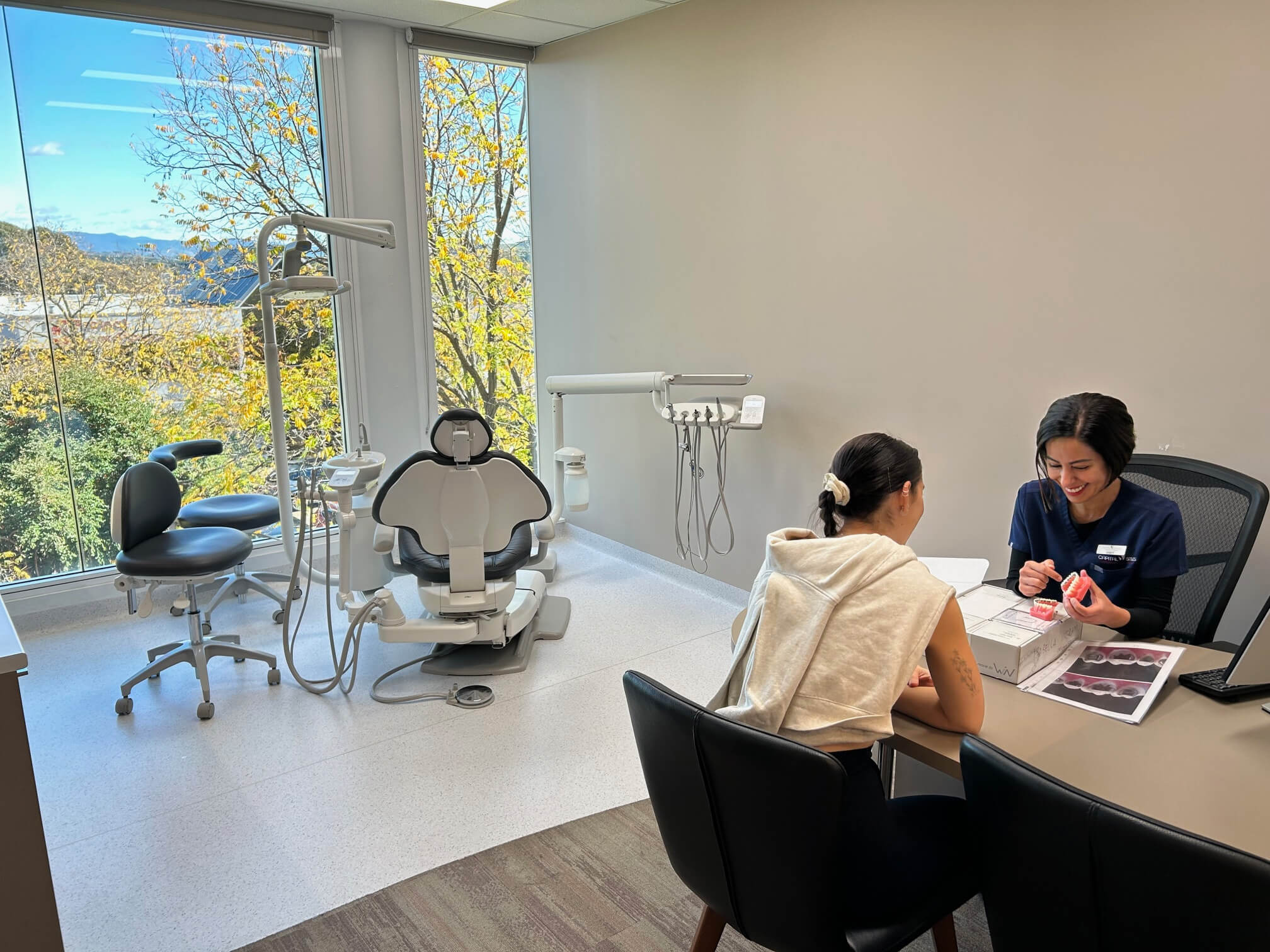
Winter is a practical time to start orthodontic treatment because it allows you to complete the initial adjustment period during a quieter social calendar, with fewer public-facing events and comfortable indoor recovery conditions.
- You can manage the speech adaptation phase during a period with fewer presentations, networking functions, and formal engagements.
- You can recover more comfortably indoors during the first weeks after bracket placement rather than navigating the summer heat.
- You can benefit from the expertise of Dr Jasprit Singh at Capital Smiles, who holds two Masters degrees in Orthodontics: an MSc in Orthodontics from University College London, and a Master’s degree in Lingual Orthodontics from Hannover Medical School. Consultations are available throughout May and June.
Minimise Disruptions to Your Work Schedule with Smart Timing
Timing matters because orthodontic treatment is a logistical decision that needs to fit your professional calendar. Winter eases the scheduling pressures faced by Canberra professionals in the Australian Public Service, legal sector, academia, and healthcare in three practical ways.
- Fewer public-facing events. Canberra’s social calendar is lighter between May and August. Fewer conferences, networking dinners, and outdoor functions mean less self-consciousness during the initial adjustment phase, even though lingual braces are invisible from the front.
- Indoor recovery comfort. The first weeks after bracket placement can involve mild soreness and some speech adjustment. Spending that period in the warmth of a home office or indoor workspace tends to be more comfortable than navigating summer heat and outdoor events.
- Treatment timeline alignment. Adult orthodontic treatment generally ranges from 12 to 24 months (American Association of Orthodontists, 2026). Starting in May 2026 typically positions completion between May 2027 and May 2028, depending on case complexity. For many patients, that means being well into the refinement phase by the following summer, when social and professional schedules pick up again.
What Happens During the Adjustment Phase?
During the adjustment phase, you can expect mild soreness and some speech changes in the first few weeks, gradually settling as the tongue and soft tissues adapt. Understanding this realistically helps explain why winter timing is practical.
Week One
Mild soreness around the teeth and gums is normal as teeth begin to respond to the initial force. Most patients manage this with standard over-the-counter pain relief recommended by their orthodontist. Speech may feel different, particularly with lingual braces, as the tongue adjusts to the bracket profile on the inside surfaces of the teeth.
Weeks Two to Four
Soreness typically eases. Eating becomes more comfortable as soft tissue adapts. A systematic review in the European Journal of Orthodontics found that lingual fixed appliances primarily affect /i/, /s/, /t/, and /d/ sounds, with adaptation occurring across the first weeks of wear (Chen, Wan, and You, 2018). Individual experience varies, and some patients adapt more quickly than others.
Settling Into a Routine
By the end of the first month, eating becomes more comfortable as soft tissue adapts. The cooler months give you a flexible calendar window to manage these early adjustments without competing demands from peak professional periods.
You can easily handle the brief adjustment phase by starting treatment in winter when you have fewer work commitments to worry about. The initial adjustment period is short but noticeable, making the cooler months the smartest choice for these practical reasons.
- A public servant preparing for Senate Estimates in February, for example, may find a May start more practical than a January one.
- Starting in winter means you get through the initial adjustment phase while your calendar is more flexible and the pressure at work is likely lower.
Keep Your Treatment Discreet with Custom Lingual Braces
You can maintain a professional appearance by choosing lingual braces, which are bonded to the tongue-facing surfaces of your teeth so they remain unseen from the front. Capital Smiles specialises in lingual orthodontics, which suits Canberra’s professional demographic for several reasons.
- APS and parliamentary roles often involve media appearances, stakeholder briefings, and public testimony where visible brackets could be a distraction.
- Legal professionals present in courtrooms and client meetings where appearance signals credibility and composure.
- Healthcare professionals model health standards for their own patients and colleagues.
- Academic leaders present at conferences, lecture halls, and public forums where attention should stay on the content, not the speaker’s teeth.
Dr Singh holds the Master of Science in Lingual Orthodontics from Hannover Medical School, the postgraduate qualification first established for lingual orthodontics in 2006/07 and not currently offered by any university in Australia or New Zealand. This is not a general orthodontist offering lingual braces as a side option; Dr Singh is the only orthodontist in the ANZ region with this academic qualification. Learn more about Dr Singh’s training and approach.
Get Clear Answers and Tailored Treatment Plans During Your Winter Consultation
A winter consultation at Capital Smiles includes a comprehensive 45-minute clinical assessment, a goal discussion, tailored treatment options, realistic timeframes, and a clear fee estimate. The consultation covers:
- Clinical assessment of your teeth, bite, gums, and jaw alignment.
- Goal discussion, including the specific concerns you want addressed and your professional lifestyle needs.
- Treatment options tailored to your case, with an honest comparison of lingual braces, clear aligners, and ceramic brackets where relevant.
- Realistic timeframes based on the complexity of your case.
- Fee estimates and health fund guidance so you can plan with confidence.
There is no obligation to proceed. Many patients use the consultation to gather information and then take time to decide. That is what the appointment is designed for. Book a consultation here.
Plan Ahead with a Clear Timeline
Adult orthodontic treatment generally takes 12 to 24 months (AAO, 2026), and a winter start offers a predictable timeline for your professional life. While Dr Singh provides a personalised estimate during your consultation, the table below offers a general sense of how a winter start may map across the year.
| Phase | Approximate Timing | What Happens |
|---|---|---|
| Consultation and records | May to June 2026 | Clinical assessment, digital scans, treatment plan |
| Bracket placement | June to July 2026 | Lingual brackets bonded, adjustment phase begins |
| Active treatment | July 2026 to mid-2027 | Regular adjustment appointments (every 6 to 8 weeks) |
| Refinement | Mid-2027 onward | Fine-tuning tooth position, preparing for retention |
| Retention | Post-treatment | Retainers fitted to maintain results long-term |
Individual timelines vary based on the specific orthodontic concern. Dr Singh provides a personalised estimate during the consultation.
Book Your Winter Consultation Today
Booking a winter consultation is a practical step toward straightening your teeth while making use of a quieter calendar and indoor comfort. The timeline alignment works in your favour for the following season.
- Capital Smiles is a Canberra-based orthodontics practice with a focus on lingual orthodontics.
- Consultations are available throughout May and June.
- All treatment recommendations are made through an individualised clinical assessment, in line with the AHPRA Guidelines for Advertising a Regulated Health Service, 2020.
Book Your Consultation
Capital Smiles is led by Dr Jasprit Singh, who holds an MSc in Orthodontics from University College London and a Master’s degree in Lingual Orthodontics from Hannover Medical School. All treatment recommendations are made through an individualised clinical assessment, in line with the AHPRA Guidelines for Advertising a Regulated Health Service, 2020.
Sources and Further Reading
- American Association of Orthodontists. How Do Braces Work? aaoinfo.org/treatments/braces
- Australian Health Practitioner Regulation Agency. Guidelines for advertising a regulated health service, revised 14 December 2020. ahpra.gov.au advertising guidelines
- Chen J, Wan J, You L. Speech and orthodontic appliances: a systematic literature review. European Journal of Orthodontics, 2018; 40(1): 29-36. academic.oup.com EJO (PMID 28472259)
- Orthodontics Australia (Australian Society of Orthodontists). orthodonticsaustralia.org.au